Showing posts with label science. Show all posts

Sunday, March 24, 2019

When Ethics Conflict With Science By Chloe Clancy

Peter Zhu
        At the beginning of this month, a West Point Military Cadet, Peter Zhu, was tragically killed in a skiing accident in New York. Peter, an only child, had always dreamed of living on a ranch with horses and five kids, and unfortunately, after he died, this dream could no longer be fulfilled. To make up for this, his parents had one wish, which was to preserve his sperm. Who knew this decision would spark such controversy? His parents quickly hired a lawyer, in attempt to save their family name. There are a lot of ethical questions that arise from this issue, making it hard to decide what the right choice is.


        Medical experts at Stanford University and University of California San Francisco explain that since the sperm is not like other organs, they wouldn't normally grant this request, unless requested by a spouse, or with written consent from Peter. Dr. James Smith also believes that without consent, they would technically be doing the procedure against his wishes, unethically. Along with this, the United States does not have explicit laws about post-mortem sperm retrieval, and the lack of regulation conflicts with the ability to make the medical decisions. Ultimately more questions are asked, such as, who would he have wanted the child to be with?
        However, there is a deep cultural aspect to consider too. Since Peter was an only child, and had no male cousins, his death would eventually be the end to a cherished family bloodline. His parents express how important it is to their Chinese culture to save the linage, and they feel this is their only opportunity to do so. They also want to save a piece of him that can bring back the memories and joy that he brought his family. 
        Personally, I don't think this is an ethical decision. If the family was to save his sperm, the child wouldn't technically be his. The child also wouldn't have the emotional connection to his parents that most other children have. Plus, in these circumstances, it is unable to tell who Peter would have wanted the mother to be, and whether or not he would have trusted his parents to choose an egg donor. According to David Magnus, the director of the Stanford Center for Biomedical Ethics, post-mortem sperm retrievals are becoming more popular, due to the scientific advancements surrounding it. Despite this, I would still only grant this request to a spouse, not a parent. To me this seems like it could set a wild precedent for the future, which could eventually become problematic. I can only imagine the loss felt by his parents, and I understand the cultural aspect in this debate, however the ethics surrounding the science of the retrieval are far too complicated in our world, and the best decision is to not have the procedure done. 


Reference: https://www.eastbaytimes.com/2019/03/05/parents-want-to-preserve-dead-sons-sperm-but-what-next/ 

Monday, December 31, 2018

Unit 1 Voice Challenge by Liv Przydzial


Unit 1 Voice Challenge
by Liv Przydzial

In Unit 1, our class discussed how to dissect and analyze an author's structure and diction. One of the key topics we learned about was voice, and we did several exercises aimed at helping us develop our very own voices as young authors. In my December blog post, I just wanted to play around with different voices portrayed through my writing to challenge myself a bit, as exhibited below:

Example 1

Everyone was looking at me. I mean, how could they not? With my perfect bod, sparkling dress, long curled hair (each curl with the perfect level of bounce, of course), and manicured nails, it's visibly hard for people to take their eyes off of me. I was stunning. As amazing and gorgeous I looked, my science project was even cooler. Not only was my volcano oozing with lava at the perfect consistency, but it was also bubbling! As soon as they turned the lights out, everyone's socks would be knocked off by how the lava glows in the dark. I know, I'd be speechless too. God, I should be in college already! They should've engraved my name into the first place trophy for this year's science fair as soon as they saw my name on the sign-up sheet.


In this first example, the reader can experience the cocky, matter-of-fact nature of the character through the first person point of view. Through questions such as, 'I mean how could they not?', and statements such as, 'God, I should be in college already!', the author's voice clearly conveys the character's cocky nature.

Example 2: 

September 21, 2067: 

I can't write much. No time. 

It's been 5 years.
I don't know how we haven't died yet. By we, I mean me and my sister. 
Every1 else - long dead.
Food's running out. Window's cracked. Water's tainted.
We'll only last a month or so, if even. 

But Shaya's started coughing. 

September 25, 2067:

Shaya's dead.
No water. No food.

I'll be dead by morning.


This example consists of two dark, gloomy diary entries. The choppy sentences create a more dramatic aura by being very to-the-point. Through the use of short phrases, the reader gets the idea that the character was in a rush, and gains an understanding of the dire nature of the situation. The character who wrote these entries clearly takes a very realistic, down-to-earth view on her circumstances, as conveyed when she made a prediction for how long she and Shaya would last and in the second entry with the statement, "I'll be dead by morning.' She doesn't make any hopeful remarks but rather just accepts her situation, as can be seen by how she stopped writing after making the conclusion that she would be dead by morning.

Wednesday, October 31, 2018

Southeast Asia Underwater by: Mikayla Flanz


      Global warming. A gradual increase in the overall temperature of the Earth's atmosphere. It's a term kids from the past few generations have grown up with, but has now evolved into "climate change". The same meaning as global warming, only including the monumental consequences that come with it.

Up until the past few years, as a global community we have yet to reap the effects of climate change, but now that we have; hurricanes, temperatures, sea levels, and many other events have sent us spiraling. But up until now, there has never been a real threat to our ways of life.

Image result for earth

     According to science correspondent, Josh Gabbatiss's article from British newspaper, The Independent, as opposed to the inhabitants of Southeast Asian and Pacific Islands getting the next century to keep their native lands, new research published in the journal, Science Advances proclaims that the once promised one hundred years are now diminished to a few more decades. 

Since the Industrial Revolution, more and more of the green house gases such as, carbon dioxide and methane have been released, overall warming our planet. Although this "warming" has only come to about a two degree global increase, that change melted enough of the ice caps for there to already be devastating floods throughout these islands. The constant rising sea levels exert more water onto the low lying land, here the sea water is able to leach into the soil, spill into freshwater supplies, and decimate infrastructure and farm land. 

    Narrowing in on the Marshall Islands of the South Pacific, Science Advances illustrates the 70,000 natives of these chains of islands, where due to climate change and rising sea levels they will lose access to freshwater supplies, causing their farming industry to collapse, leaving a good portion of these inhabitants with little to no income or food. Along with the fact that, the rushing flood waters will sit in the dry walls of these houses for days at a time before clearing out and drying, therefore leaving mold in it's place. However, the authors also find that these issues will soon extend to neighboring islands such as the Maldives, Hawaii, and Seychelles, driving hundreds of thousands of people from their ancestral homes.

Image result for water flooding island asia

This is definitely the most selfish and least important reason to want the islands to stay right where they are, BUT... I have always wanted to travel to these places. These destinations are stunning, the landscape, the sites, the culture, to experience it all would be extraordinary. Stepping away from my traveling fantasies, there are more important matters...

Anyway, as someone who has always dreamed of traveling the globe all their life, to now see the world being picked apart and slowly demolished is devastating, but to the people living this out and losing the only home they have ever known must be like walking through their own never ending nightmare. 70,000 people. And that is just one chain of islands, what about the more densely populated Maldives or state of Hawaii. Where are all these people going to go? What are they going to do? Some of these people know nothing outside of their island chains, are they supposed to simply adapt from thousands of years of tradition overnight? 

Not to point fingers, but those who think climate change "doesn't exist" or is a "natural occurrence" are going to be very sorry some day, and that day may be coming soon. Even though this is happening thousands of miles away, across oceans, on a different continent, who is to say this can never happen to our coasts. Already, climate change is mauling our southern coasts, nothing permanent yet, but nothing is impossible, these people native to these Pacific islands probably thought that they would die in their home, as would their children, as had their parents, and relatives before them, all before their world was torn apart.


As a global superpower, we can not stand idly by while this is happening, sure it has not directly effected us yet, but eventually it will. So what if we have to give up certain things like oil and coal, and invest for a future in eco-friendly power systems, hundred of thousands of people will have to give up their land by the middle of the century. Maybe it might be too late to save some of the islands, but do we really want to see this underwater and abandoned? Gone?

Image result for south pacific islands

Who really wants to see this gone?


Citations:Josh Gabbatiss Science Correspondent “Rising Sea Levels Will Leave Islands From the Maldives to Hawaii Uninhabitable.” The Independent, Independent Digital News and Media, 25 Apr. 2018

Pleistocene Park -- By Rachel Young

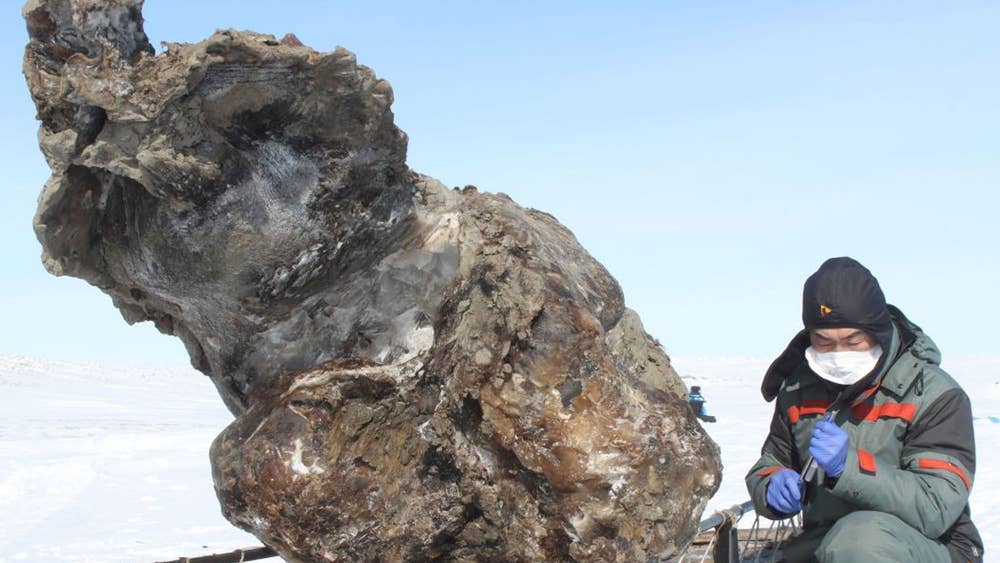
We've all seen Jurassic Park. We've all wondered what it would be like to see prehistoric roam the earth. This dream, however, this wild, unimaginable concept, could become reality in future years, with Russia working to recreate the Woolly Mammoth.
Yes, that's right. The Woolly Mammoth. The creature extinct for over 10,000 years could be making a comeback to Siberia's icy terrain as early as 2030.

Russian scientist Nikolaev explained that all this is possible because of DNA samples found preserved in the permafrost of Yakutia. The project is projected to “aim to study extinct animals from living cells - and to restore such creatures as the woolly mammoth, woolly rhinoceros, cave lion and breeds of long-gone horses”, according to experts. To recreate these prehistoric beasts, DNA is extracted from preserved samples and spliced with the genetic material of modern asian elephants. These cells are then reprogrammed to stem cells and are added to the egg of an asian elephant, which are then fertilized in an artificial womb. 


The recreation of this species isn't all for show, though. Woolly Mammoths could benefit the environment, helping to prevent Siberia's permafrost from melting and releasing billions of tons of greenhouse gases. The cold resistant elephants could flatten the snow-- supporting trees in the winter and heat reflective grass in the summer. The enhanced photosynthetic capacity of plant life would also help capture greater amounts of carbon. Scientists have also been working to introduce more animals, like wild cats and cave lions.


With a little hard work, a beast only imagined in stories, only seen in history books, may be right before our eyes in years to come. The procedure, already set in action, could change vegetation, animal life, and the climate as we know it. 


(By the way, my blog is highlighted, I did it by accident and im not really sure how to get rid of it!)

Image result for woolly mammothImage result for woolly mammoth park siberia

Tuesday, October 30, 2018

New Implant for Rats Gives a Good Indicator for the Future of Electrical Therapy- Daniel Devine

Image result for rats

Pulses of electrical stimulation help heal injured nerves, research is displayed that shows a possible method of healing for these peripheral nerve injuries. Scientists at Washington University School of Medicine in St. Louis and Northwestern University have created a biodegradable implant that delivers pulses of electrical energy to injured nerves in rats, allowing the rats to heal nerves in their legs. The device is approximately the size of a quarter and only stays in the body for two weeks before being completely dissolved. John Rogers, a PhD of Northwestern and some associates created a device that wraps around a damaged nerve and gives pulses of energy for a few days until the device dissolves into the body harmlessly. The device is powered by a wireless transmitter outside the body that is similar to a cell phone charging mat. The researchers used the device to give electrical stimulation for one hour a day to the rats for either one, three or six days, or even no stimulation at all. They then the rat’s recovery for the following 10 weeks. Any stimulation was better than no stimulation at all at helping the rats to regain muscle mass and strength. The researchers also found that the more days of stimulation they gave the rats, the faster they recovered muscle strength.


While this may be all of the available research that has been presented in this article, there is research still occurring with scientists attempting to unlock the full potential of electrical nerve repair and a great effort to make the transition from rats to humans. When this research is complete, millions of people with nerve injuries will be able to heal much faster than before. While this is incredible, there are even more benefits to this research, that being the boost in research funding that would come with this kind of treatment. There is a visible need for this device to be compatible with humans and if these researchers develop this treatment enough as to where it is able to work on a human in an effective and noticeable manner, then more funding will go into the research department which would allow more availability for these great minds to research other kinds of technology. This idea supports the purpose of the article in question as well, showing that there needs to be an effort to get the word out about this research and its need for funding, making an article about the progress of research a way to do this. Another thing that this research does is allow scientists to question whether or not this kind of treatment could have other applications, such as repairing neurons in the brain or spinal nerves.


Monday, October 8, 2018

The winners of the 2018 Nobel Memorial Prize in Economic Science (Olivia Giralt)


    On October 8th, two economists, Paul Romer and William Nordhaus were awarded the 2018 Nobel Memorial Prize in Economic Science for their work focusing on the significance of government policy in economic growth and climate change.    


(William Nordhaus is pictured on the left and Paul Romer is pictured on the right).

    Nature explicates our living conditions and knowledge interprets our capability to manage our living conditions. Regardless of the major role that nature and knowledge play in economics, economists typically do not examine the effect of the economy and the market in nature and knowledge. However, Paul Romer and William Nordhaus stood out from other economists by calling attention to nature and knowledge's significance in the economy. Paul Romer's work explains the economy's role in knowledge while William Nordhaus's work explains the economy's role in nature.

  Paul Romer is currently a professor at NYU Stern School of Business. He was recognized for elucidating how technological advances steer economic growth. He developed the "endogenous growth policy". This theorizes that economic growth is generated by a system influenced by components, in particular, effective and advancing technology. Paul Romer constructed an improved assimilation of how market conditions favor the establishment of new ideas for profitable technologies. Romer's work was inspired by the growth that originated from the Industrial Revolution, a time period with utmost industrialization, manufacturing, and mechanization.

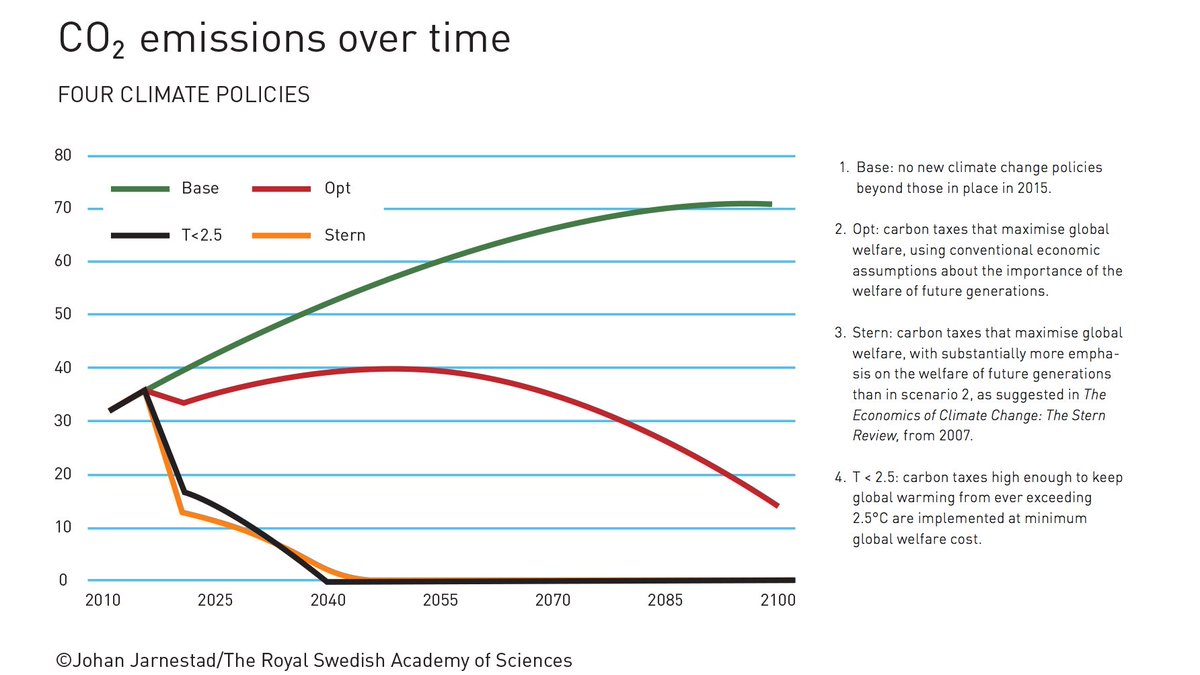
  William Nordhaus received his doctorate in economics from the Massachusetts Institute of Technology and currently is a Sterling Professor of Economics at Yale University. He was recognized for creating a model displaying the relationship of the climate and the economy, as well as how the relationship impacts the advancement of carbon tax policies. A carbon tax assists in decreasing the greenhouse gas emissions by placing a tax on the burning of fuels. William Nordhaus believes that limiting carbon emissions can be done by requiring governments or companies to pay a cost for certain levels of emissions.


(The diagram pictured above displays the CO2 emissions of four climate policies according to the simulations of William Nordhaus)


My Earliest Memory by Emma Cerra

When thinking back to my earliest memory, I wonder why I remembered it. It’s a really odd memory, hazy to the point where I feel like it cou...