by Liam Rust
 |
| The Google Pixel 3 (left) and Pixel 3 XL (right). |
Phones have been changing a lot in the past couple of years, and one of the big trends has been a steady increase in size. Now, though, phone manufacturers are increasing size in a different way - screen size. Increasing the size of a phone screen while keeping the phone the same size allows the phone to be hold-able, but still increases its usable area.
It seems simple enough - put a bigger screen with less bezel around it and you have a bigger screen, done! While this is a part of it, there are some issues that can be encountered. The electronics that control the screen need to be a part of the screen itself, and since there are other sensors and electronics on the top (to be discussed later), they are usually put in the bottom. This means that the screen cannot be extended all the way to the bottom simply and easily.
Some phone manufacturers, like Apple, have taken a different approach. They extend the screen all the way to the bottom, and curve it into the phone itself. The electronics are then put onto the inner section of the display, making it look like it extends all the way to the bottom from the outside.
 |
| The iPhone X with an x-ray view from the side. Notice how the screen curves into the phone |
|
|
|
|
|
|
| . |
This fixes the bottom of the phone, but one glaring issue is the top of the phone. Since the top houses many different sensors and electronics (camera, proximity sensor, light sensor, speaker, and more depending on the phone), and some of these cannot be put under the screen, many phones have compromised with a little cutout for them colloquially called a "notch." The iPhone X was one of the first phones to have this, but many other phones have also put it into their own devices. The Pixel 3 XL is one of the worst offenders with the notch, as it has an abnormally large one that leaves wasted space.
/https%3A%2F%2Fblueprint-api-production.s3.amazonaws.com%2Fuploads%2Fcard%2Fimage%2F873341%2F902a0b34-2eb0-459d-8d68-1a62b1da8769.jpg) |
| It even has a little face! |
Some sensors, though, are able to be put under the screen. One of these is the fingerprint scanner, which on most newer phones is either on the back of the phone or removed completely. Some phones, such as the OnePlus 6T, have put the scanner into the screen, scanning the fingerprint with light from the screen and becoming invisible once it is scanned. It saves space and adds convenience, as the user can once again unlock the phone with a fingerprint while it is lying on a table or surface.
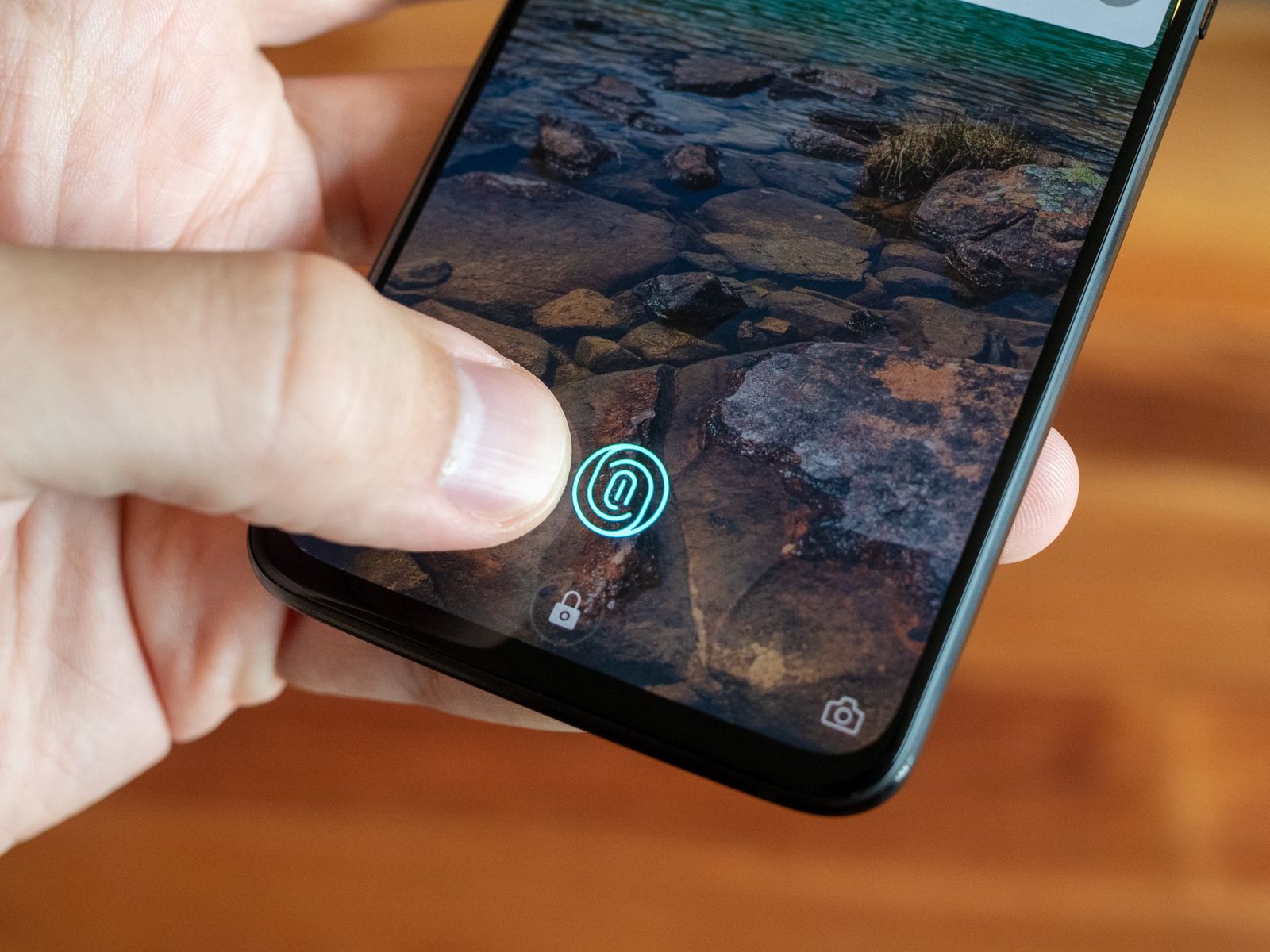 |
| The OnePlus 6T's fingerprint scanner. |
The camera is one of the hardest sensors to hide, as it requires a clear view to function correctly. Instead of putting it under the screen, some phones (such as the Vivo Nex S and Oppo Find X) have actually motorized the camera, having it move in and out of the phone as needed in order to keep the phone notch-free.
 |
| The Vivo Nex S with the camera extended. |
New advancements are being made all the time, though, and more and more sensors and electronics are being made to either be under the screen or be somewhere else on the phone. A recent leak from a Samsung presentation shows a couple of these advancements, such as a fingerprint scanner in the display, a camera under the display, and a speaker integrated into the display.
 |
| The leaked image from the Samsung presentation, showing off an under-screen camera and fingerprint sensor, along with a speaker that is part of the screen. |
Phones are in a bit of a transitional stage right now. We are trying to make them all screen, but the current technology isn't quite there yet, so we compromised with the notch and the bottom bezel. With new advancements being made all the time, though, we may finally be able to put everything into place, and achieve the ideal, full-screen phone.
 We have some positive vibes from our group chat, this was totally not staged, don't worry about it!.


