Showing posts with label death. Show all posts

Tuesday, April 23, 2019

Fetching Water by Liv Przydzial

Fetching Water
by Liv Przydzial
Somewhere in Northeastern Mexico, 2040
Image result for northeastern mexico map
Gasp! I woke in a cold sweat, not remembering where I was or what I was doing. I took
several wispy, shallow breaths as I tried to work out the situation. It was probably three or
four in the morning, ‘cause Momma was starting to wake. I laid back down and tried to
calm myself and clear my head, but my thoughts swirled around in my head like a violent
tornado. The hollering of men. Gunshots. Yelling. Mothers shrieking as they watched their
children fall dead, with bullets shot straight through their hearts. Papa hollering for us to get
down and move fast. Momma looking for the twins, Carly and Jenna. Carly being shot
through her head as she let out an earsplitting screech in agony. Momma shaking in horror,
sobbing, trying to keep herself together. Papa grabbing me with his big, strong hands as we
neared the edge of our Texas City home. Papa telling us to run as fast as we could straight
ahead. Papa running back to the chaos to help the wounded. Waking up the next morning
to distant gunshots. Walking for days and days and days, only stopping for water at small
brooks and streams.
The War has long since been over. The small hut that my family has called home for
these past few years was barely standing. I don’t even know how old I am, or where exactly
we are. Everything about the War has since been a blur for me. Jenna didn’t even know she
had a twin sister, or that there was a war. Momma was always so sad and miserable without
Papa. But I know he’ll be back one day. He wouldn’t just leave us. I gently touched the little
amber necklace that hung around my neck. Papa had given it to me on my tenth birthday
back in Texas, and I haven’t taken it off since. As I wondered about when Papa would come
back, I slowly dozed back off, leaving my troubled mind elsewhere.
* * *
“Lori, wake up. Lori, come on,” Momma urged me. My eyes fluttered open and I saw
Momma sitting on the floor by my blankets with her legs crossed. I groaned as I pulled myself
out of bed. I thought of the long day ahead of me. In Texas, a so-called ‘long’ day would be a
day of school with a test or quiz. And I would complain as if I was in the worst situation ever.
Never had I imagined my days to be ‘long’ in this sense. I pulled myself out of my tangled heap
of blankets and reached over to poke Jenna, who was snoring, immersed in what seemed like
her hell-bent attempt at hibernation. “Come on, Jenna,” I said, “It’s time to go fetch water.”
Pulling on my old, raggedy shorts, I thought about the long trip ahead of me. I’ve been
going to the stream for years now, ever since we came here. Jenna was tossing her blankets
into a heap in the corner of the room, groaning each time she had to bend down. I grabbed my
ten-gallon water jug from the ramshackle table near the door and called for Jenna to hurry up.
She grabbed her jug and handed me my canteen of water as she swung hers over her sunburnt
shoulder. We hurried out of the house. It was better to get all of the water chores done in the
mornings and sometimes the evenings, when the sun wasn’t out frying you like a helpless little
worm on a frying pan. It was still dark outside. The air was still and not a breeze drifted through
the land. It was hot and humid, but nothing to complain about, especially considering what it
would be like later in the day.
I looked out at the vast land of nothing but parched, cracked dirt. The only living things that
I could see were the occasional desert spoons, dispersed in this wasteland. We started walking,
both of us almost completely ignoring the aching of our legs from the work of the previous day.
We started at a brisk pace, wanting desperately to get back home and let our sore bones rest.
But in a place like this, resting was not an option. It was fetch water or die, whether you liked
it or not. Neither one of us expected that today would be the day that only one of us made it
back home.
Image result for fetching water

Sunday, March 24, 2019

When Ethics Conflict With Science By Chloe Clancy

Peter Zhu
        At the beginning of this month, a West Point Military Cadet, Peter Zhu, was tragically killed in a skiing accident in New York. Peter, an only child, had always dreamed of living on a ranch with horses and five kids, and unfortunately, after he died, this dream could no longer be fulfilled. To make up for this, his parents had one wish, which was to preserve his sperm. Who knew this decision would spark such controversy? His parents quickly hired a lawyer, in attempt to save their family name. There are a lot of ethical questions that arise from this issue, making it hard to decide what the right choice is.


        Medical experts at Stanford University and University of California San Francisco explain that since the sperm is not like other organs, they wouldn't normally grant this request, unless requested by a spouse, or with written consent from Peter. Dr. James Smith also believes that without consent, they would technically be doing the procedure against his wishes, unethically. Along with this, the United States does not have explicit laws about post-mortem sperm retrieval, and the lack of regulation conflicts with the ability to make the medical decisions. Ultimately more questions are asked, such as, who would he have wanted the child to be with?
        However, there is a deep cultural aspect to consider too. Since Peter was an only child, and had no male cousins, his death would eventually be the end to a cherished family bloodline. His parents express how important it is to their Chinese culture to save the linage, and they feel this is their only opportunity to do so. They also want to save a piece of him that can bring back the memories and joy that he brought his family. 
        Personally, I don't think this is an ethical decision. If the family was to save his sperm, the child wouldn't technically be his. The child also wouldn't have the emotional connection to his parents that most other children have. Plus, in these circumstances, it is unable to tell who Peter would have wanted the mother to be, and whether or not he would have trusted his parents to choose an egg donor. According to David Magnus, the director of the Stanford Center for Biomedical Ethics, post-mortem sperm retrievals are becoming more popular, due to the scientific advancements surrounding it. Despite this, I would still only grant this request to a spouse, not a parent. To me this seems like it could set a wild precedent for the future, which could eventually become problematic. I can only imagine the loss felt by his parents, and I understand the cultural aspect in this debate, however the ethics surrounding the science of the retrieval are far too complicated in our world, and the best decision is to not have the procedure done. 


Reference: https://www.eastbaytimes.com/2019/03/05/parents-want-to-preserve-dead-sons-sperm-but-what-next/ 

Monday, December 31, 2018

Unit 1 Voice Challenge by Liv Przydzial


Unit 1 Voice Challenge
by Liv Przydzial

In Unit 1, our class discussed how to dissect and analyze an author's structure and diction. One of the key topics we learned about was voice, and we did several exercises aimed at helping us develop our very own voices as young authors. In my December blog post, I just wanted to play around with different voices portrayed through my writing to challenge myself a bit, as exhibited below:

Example 1

Everyone was looking at me. I mean, how could they not? With my perfect bod, sparkling dress, long curled hair (each curl with the perfect level of bounce, of course), and manicured nails, it's visibly hard for people to take their eyes off of me. I was stunning. As amazing and gorgeous I looked, my science project was even cooler. Not only was my volcano oozing with lava at the perfect consistency, but it was also bubbling! As soon as they turned the lights out, everyone's socks would be knocked off by how the lava glows in the dark. I know, I'd be speechless too. God, I should be in college already! They should've engraved my name into the first place trophy for this year's science fair as soon as they saw my name on the sign-up sheet.


In this first example, the reader can experience the cocky, matter-of-fact nature of the character through the first person point of view. Through questions such as, 'I mean how could they not?', and statements such as, 'God, I should be in college already!', the author's voice clearly conveys the character's cocky nature.

Example 2: 

September 21, 2067: 

I can't write much. No time. 

It's been 5 years.
I don't know how we haven't died yet. By we, I mean me and my sister. 
Every1 else - long dead.
Food's running out. Window's cracked. Water's tainted.
We'll only last a month or so, if even. 

But Shaya's started coughing. 

September 25, 2067:

Shaya's dead.
No water. No food.

I'll be dead by morning.


This example consists of two dark, gloomy diary entries. The choppy sentences create a more dramatic aura by being very to-the-point. Through the use of short phrases, the reader gets the idea that the character was in a rush, and gains an understanding of the dire nature of the situation. The character who wrote these entries clearly takes a very realistic, down-to-earth view on her circumstances, as conveyed when she made a prediction for how long she and Shaya would last and in the second entry with the statement, "I'll be dead by morning.' She doesn't make any hopeful remarks but rather just accepts her situation, as can be seen by how she stopped writing after making the conclusion that she would be dead by morning.

Thursday, November 1, 2018

Venezuela's, More Like Latin America's, Spillover Disease Epidemic By Liv Przydzial

(Sources:
https://wwwnc.cdc.gov/travel/notices/watch/measles-brazil
https://www.washingtonpost.com/news/world/wp/2018/10/31/feature/as-venezuelas-health-system-collapses-disease-spreads-beyond-its-borders/
https://www.sbs.com.au/news/at-least-54-children-dead-in-venezuela-measles-outbreak-ngo)

Venezuela's, More Like Latin America's, Spillover Disease Epidemic 
By Liv Przydzial 

Venezuela, the victim of a five-year-long depression, has reached the point of societal collapse long ago. From government corruption, to food scarcity, to nearly 2 million people leaving the country over the last two years, Venezuela is, in essence, falling apart. As Venezuela is in a tropical climate, diseases tend to thrive in this country. However, Venezuela has typically been able to contain such diseases and eradicate them accordingly, seen most recently in the malaria epidemic decades ago. The disease was contained and wiped out from certain regions, which have been free of it since. This was all before Venezuela began the steep slide downhill. In the last few months, Venezuela has seen malaria outbreaks in the regions in which it was eradicated from decades ago. Immigrants brought over new diseases which flourished in the nourishing Venezuelan conditions, which are spilling over borders at an unmeasurable rate. Surrounding countries face similar collapses in the face of these detrimental diseases, with immigrants flowing from country to country in search of refuge from their governments and the diseases. Just recently, a new disease was brought to Venezuela: measles.

Venezuela was a relatively poor country to begin with, but with its economy in a state of constant turmoil and crisis, only a staggeringly small amount of people are able to get vaccinated for measles. Venezuela hasn't seen measles in years, but in the Brazilian Amazon, Venezuela's next-door neighbor, measles have recently been devastating the region. Diphtheria, a bacterial infection affecting the nose and throat areas, is extremely rare here, but has now taken over Venezuela's people, who cannot afford to be vaccinated (this disease is easily prevented with a single vaccination, but considering the economic state of the country and its people, it is with no surprise that they cannot afford such vaccinations for such a (previously) rare disease). With more than 170 new cases every week, the epidemic is spreading at an astronomical rate, and diffusing into neighboring Latin American countries. Furthermore, many doctors are inexperienced when it comes down to measles, given that most had never seen a single case of this or other introduced diseases in their entire careers, only reading about them in textbooks.
Pictured above is a measles patient with her mother at Delphina Rinaldi Abdel Aziz Hospital in Venezuela. She ended up pulling through and surviving the disease.  

Containing these diseases, let alone treating them, has become an increasing challenge over the last handful of years. Doctors complain of the holes in the walls in disease wards. Some point to the overlooked slipping of Venezuela's health care system as the culprit for this growing crisis, while others look to the collapse of the country as a whole. Vaccines aren't being delivered to hospitals, and even the capital's largest hospital, Caracas University Hospital, has reported that it has not received new shipments of vaccines due to the inability to transport them. Cars and trucks are dysfunctional due to the lack of spare parts needed for them to be fixed and to function and the many blocked roads. Many doctors fear voicing their opinion on the issue, as making one wrong move could lead to a potentially fatal avalanche of government reprisals.
Workers from the Health Surveillance Foundation are pictured preparing measles vaccines for waiting patients. 
With the interior tensions brewing on economic, social, and political fronts, countries are turning on each other as new cases of such diseases pour through their borders. With so much unrest, diseases such as measles, malaria, and diphtheria have become a pressing new threat and the new symbol of this conflict. After all, this is not just Venezuela's problem - it's ours too. Just by looking at how uncontrollably fast diseases such as measles are spreading, this conflict could very quickly threaten not only Latin America, but other, vaster regions of the world, and even us, as immigrants move across the globe.

Want to learn more? Here's a quick video on herd immunity, which directly discusses measles as an example. (The video wouldn't upload, so here's the link: https://www.sbs.com.au/news/at-least-54-children-dead-in-venezuela-measles-outbreak-ngo)

Friday, October 19, 2018

Think America is Doing Bad? Check Out Indonesia - Marguerite Bysshe


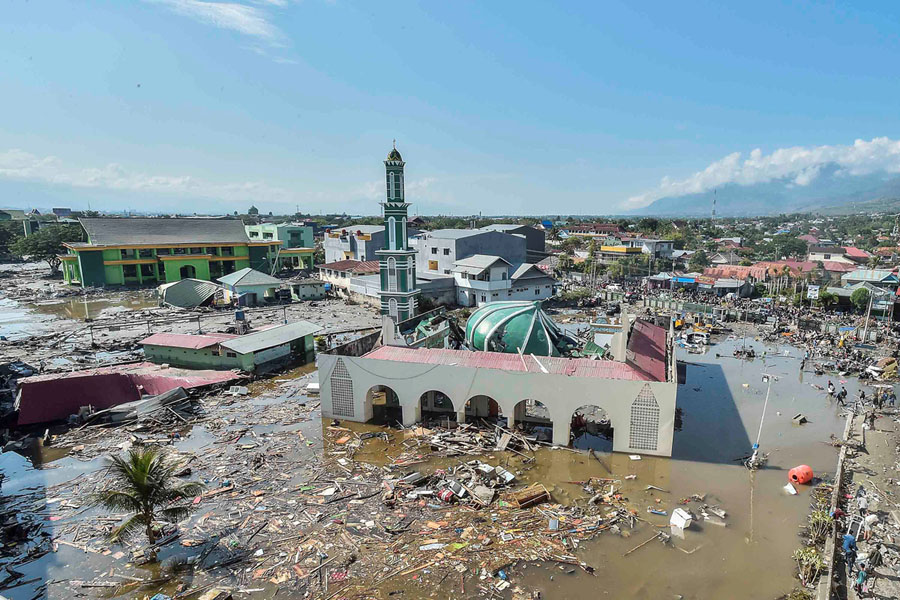
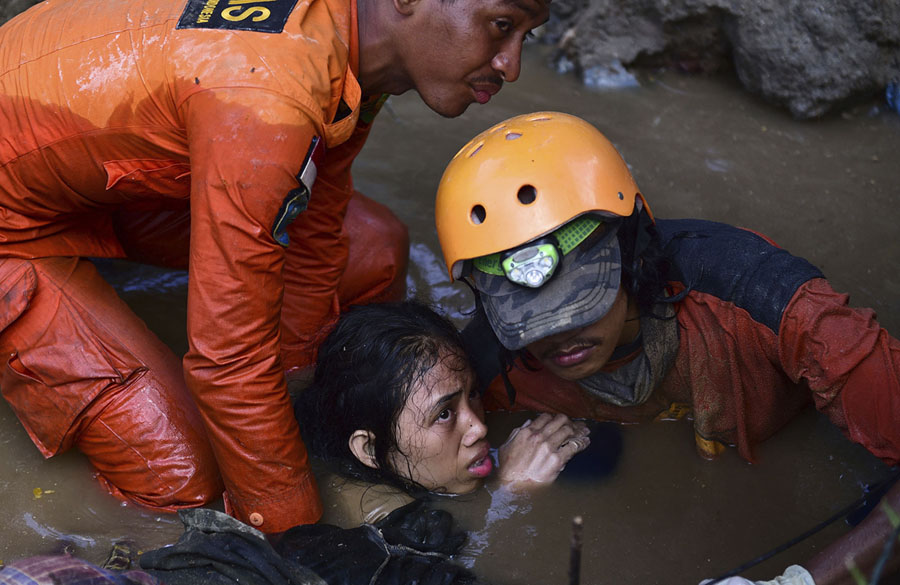
Since the end of August 2018, articles such as "Indonesia Reels from the Earthquake and Tsunami, Experts Warn of More Deadly Disasters to Come" and "Indonesia quake death toll nears 2,000 as more bodies are found" have swept the world. In recent months, detrimental earthquakes and tsunamis have wrecked havoc on Indonesia. Most recently, on September 28, an earthquake shook the island of Sulawesi with a magnitude of 7.5 (for reference, these earthquake only occur roughly 20 times a year worldwide). Palu, a city located at the north part of the island was hit the hardest. A tsunami followed shortly after, sending the death toll over 2,000 with 3,000 more missing. 
(photo from https://www.theatlantic.com/photo/2018/09/photos-from-the-deadly-earthquake-and-tsunami-in-indonesia/571765/) 

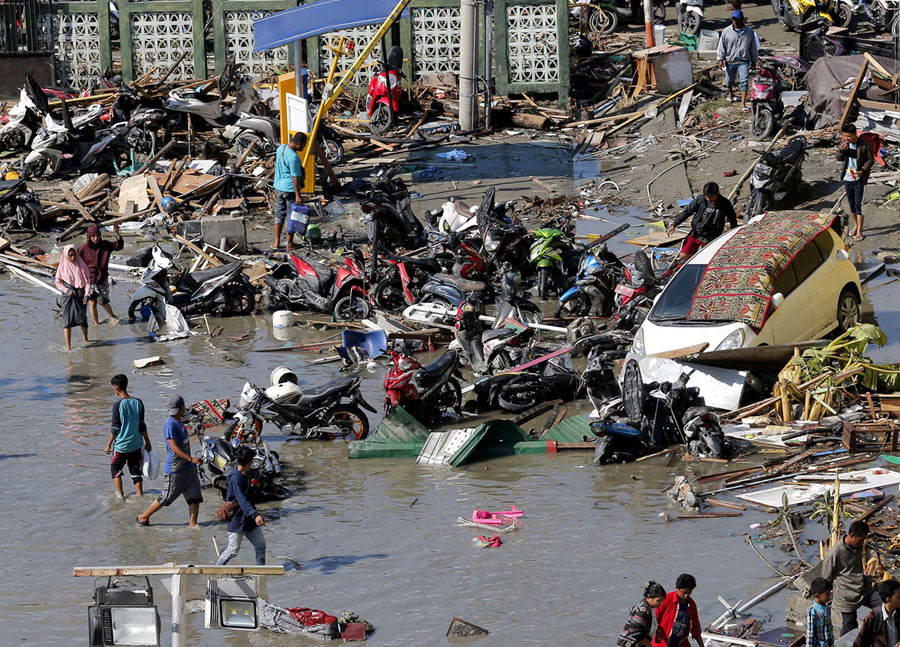
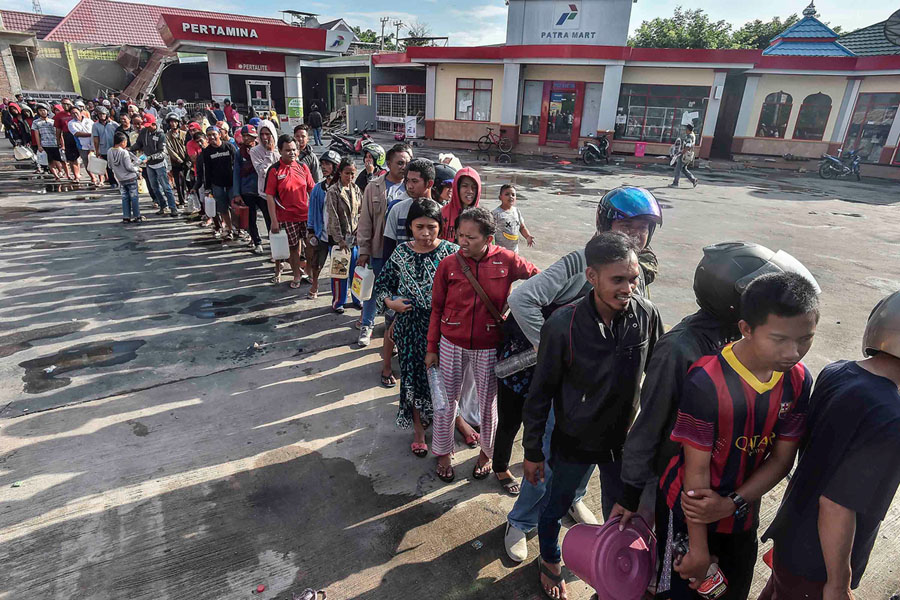
Efforts to find the missing have since been halted due to the overwhelming demand and need for funds elsewhere. On top of that, bridges and roads have been destroyed or blocked, making it extremely difficult for emergency vehicles to access those in need. Not only has this tragedy left 74,000 homeless and grieving, it has left an entire city in shambles without the money to rebuild. Experts have cited that plans have already begun, but serious progress isn't expected until 2020 or 2021. That leaves 74,000 people in and out of temporary housing for at least another year. 


(photos from https://www.theatlantic.com/photo/2018/09/photos-from-the-deadly-earthquake-and-tsunami-in-indonesia/571765/) 

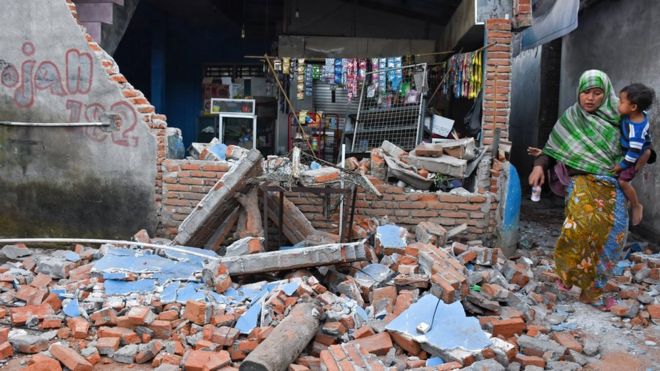
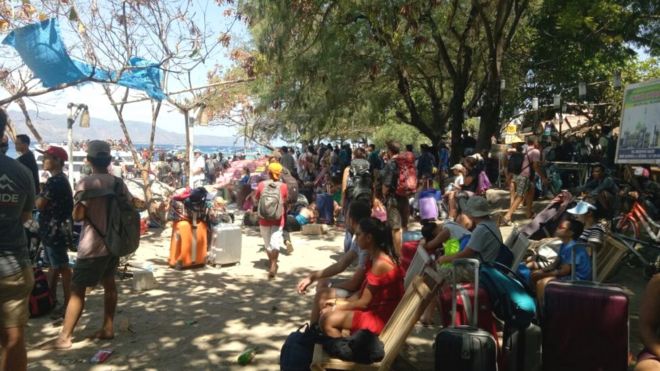
Two other major earthquakes have hit Indonesia this season. One in Lombok and one off of Java and Bali. Hundreds of quakes have rocked Lombok in recent weeks, putting the entire island on edge. However, when the most recent 7.0 earthquake hit the island, the results were worse than what could have been predicted. Thousands of buildings were destroyed and surrounding islands have been sending aid since. Food, water, and other donations, specifically from Lombok's neighbor, Bali, have helped just some of the thousands displaced. The final death count remains at just under 100 with hundreds more missing or injured. This quake has also caused a lot of problems for tourists and foreigners staying on the island. Plus, the cost of repairing damages will be about $342 million. 

A woman walks past debris from a collapsed wall following a strong earthquake in Lendang Bajur Hamlet, Lombok island,
People waiting to evacuate Gili Air, one of the Gili islands(photos from https://www.bbc.com/news/world-asia-45080138)

The quake off the coast of Bali was similar but not as intense. It did impact the IMF summit that was taking place and spooked tourists, but with a magnitude of 6.0 and three deaths, Bali will not be as heartbroken as Lombok or Sulawesi. 

What does this mean for Indonesia? 

The severity and frequency of earthquakes and other natural disasters has been increasing exponentially in recent years. Many scientists claim this could be due to global warming and rising sea levels. And because these disasters are running their course more often, developing countries such as Indonesia may start seriously struggling to keep up with the damage costs. Not only are these natural disasters detrimental to the families they effect, but the economic damage continues to be more and more severe. 

What will happen when countries like Indonesia can't pay for repairs after these disasters? What will happen to all of the people who live in rural communities who continue to struggle for years after? How will it affect people's mental health when they have to live with the loss of loved ones? These are all questions that don't have answers. Yet. Soon enough, developing countries will have yet another heavy weight on their shoulders, with that being the economic impact of these disasters. Until everything starts to play out, the rest of the world needs to continue providing support and refuge to the victims of these disasters.

Click here to offer your support or donations to the victims of the Indonesian earthquakes: CLICK HERE


My Earliest Memory by Emma Cerra

When thinking back to my earliest memory, I wonder why I remembered it. It’s a really odd memory, hazy to the point where I feel like it cou...